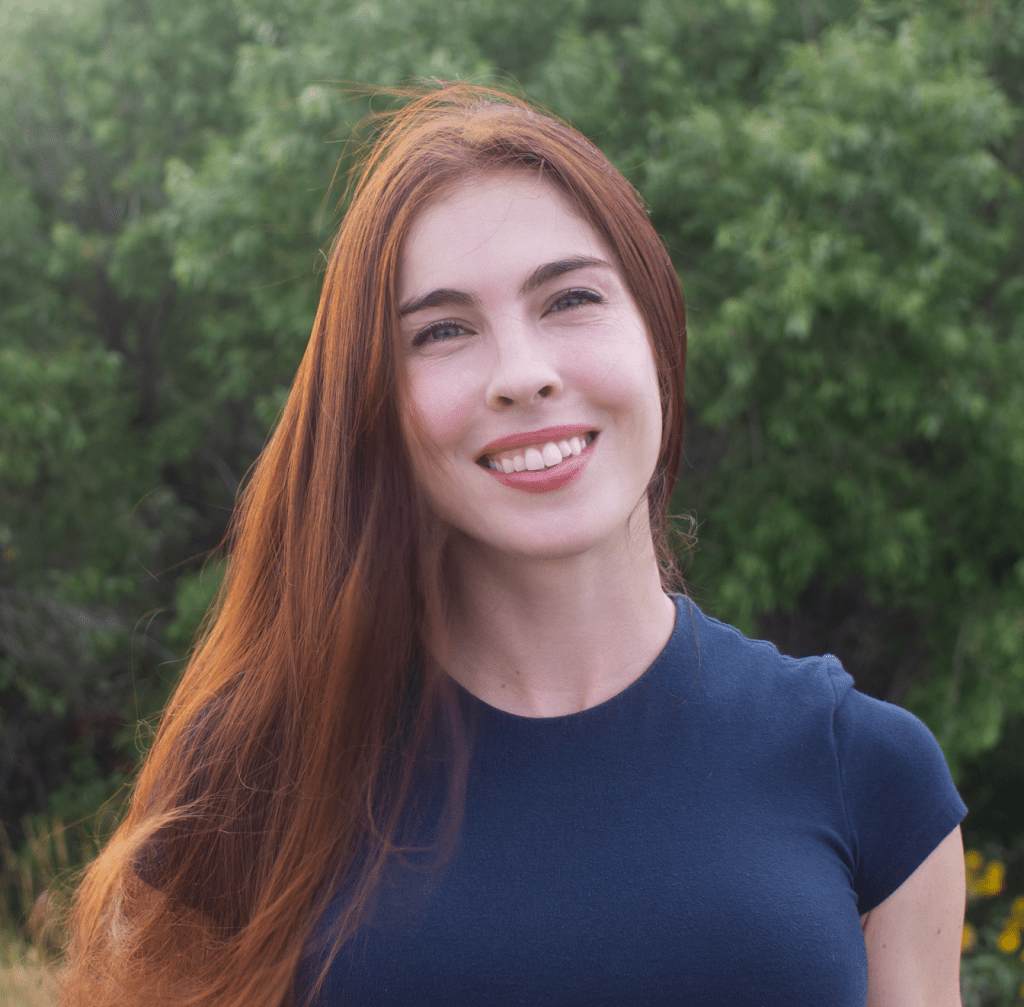
Welcome! I’m Danica Dillion. I’m a Postdoctoral Researcher working with Dr. Mirta Galesic at Complexity Science Hub and Dr. Kurt Gray in the Deepest Beliefs Lab at The Ohio State University. Previously, I was an NSF Graduate Research Fellow at UNC at Chapel Hill.
Research
I study changing belief systems: why we see the world the way we do, what happens when conflicting views come head-to-head, and how our collective understandings of the world change in tandem with new ways of living.
We were born at a time of major change. My grandparents couldn’t have imagined the modern world I’m living in, and I can’t fathom what my grandkids will be up to one day. How is all of this change impacting our belief systems?
I’m grateful to get to work on the questions that would otherwise fill up my free time. Here’s what I’m currently researching…
Large Language Model Moral Reasoning
We used to think morality was too complex for machines to ever understand. Then came the rise of AI, and particularly large language models. Our work reveals that LLMs can often predict moral beliefs with high accuracy, and generate advice rated as moral and trustworthy as that of a popular advice column. We suggest that one day, LLMs could even help yield psychological insights by simulating participants. However, there are still significant limitations to overcome. My current projects focus on enhancing transparency and cross-cultural representation in LLM moral reasoning.
Think local, help global

We face several large-scale issues that are hard to solve. One challenge is how to find solutions collectively in an atmosphere of high polarization. Can we make more progress tackling big problems locally? I’m investigating whether framing issues locally may help facilitate more concrete and productive dialogue. Our findings in related work suggest that people use more abstract, moral, and power-centric language in US national politics compared to local politics, and this shift in tone may contribute to partisan animosity.
Perceptions of AI and robots

Much of the sci-fi of yesterday is becoming the reality of today. Machines and algorithms are filling the roles of people in several industries, including domains once thought to be uniquely human: writing and art. The new capabilities of AI can be awe-striking and exciting, but also threatening and scary. I’m studying how people react to AI and robots that seem human.
Supernatural explanations

People around the globe use religion to understand the world. But what kinds of events are most commonly attributed to supernatural agents? Our ethnographic analysis of 114 historical societies suggests that people more often ascribe social events to supernatural beings than natural events. I’m now investigating how new technology may impact supernatural explanations.
Social atomization and political polarization

People used to live in tight-knit communities. Today, there is a crisis of social isolation. As our social groups are fracturing, the nation is also growing more divided down party lines. I use social network analysis to study the connections between these trends, analyzing the relationships between social network structure and partisan animosity. Our findings suggest that people in dense social networks often feel less partisan animosity.
Publications
Dillion, D., Gray, K., & Lewis, K. (2025). Social network density predicts partisan animosity. Applied Network Science.
Dillion, D., Mondal, D., Tandon, N., & Gray, K. (2025). AI Language Model Rivals Expert Ethicist in Perceived Moral Expertise. Scientific Reports.
Dillion, D., Mondal, D., Zhao, W., Tandon, N., & Gray, K. (under review). Making AI More Trustworthy and Morally Aligned by Integrating Human Cognition. https://osf.io/preprints/psyarxiv/ek46d
Dillion, D., Liu, Y., Chen, Y., Watts, J., Zhao, C., Baral, S., Buckner, W., Atari, M., Kteily, N., & Jackson, J. (under review). Prejudice Tied to State Centralization in Historical Societies. https://osf.io/preprints/psyarxiv/zxuth_v1
Dillion, D., Devine, H., & Gray, K. (under review). Pet owners often see dogs as soulmates and value them more than human lives. https://osf.io/preprints/psyarxiv/hcbrs_v1
Dillion, D., Puryear, C., Li, L., Chiquito, A., & Gray, K., (2024). National politics ignites more talk of morality and power than local politics. PNAS Nexus.
Zhao, W., Mondal, D., Tandon, N., Dillion, D., Gray, K., & Gu, Y. (2024). WorldValuesBench: A large-scale benchmark dataset for multi-cultural value awareness of language models. Proceedings of the 2024 Joint International Conference on Computational Linguistics, Language Resources and Evaluation (LREC-COLING 2024).
Gray, K., Yam, K. C., Zhen’An, A. E., Dillion, D., & Waytz, A. (2023). The psychology of robots and artificial intelligence. The handbook of social psychology. Oxford University Press.
Dillon, D., Puryear, C., & Gray, K. (2024). How psychedelics can increase moral concern. In D. Yaden & M. van Elk (Eds.), The Oxford handbook of psychedelic, religious, spiritual, and mystical experiences. Oxford University Press.
Dillion, D., Tandon, N., Gu, Y., & Gray, K. (2023). Can AI language models replace human participants? Trends in Cognitive Science.
Jackson, J.C., Dillion, D., Gray, K., Watts, J., DiMaggio, N., Doucette, M., Bastian, B., (2023). Supernatural explanations across 114 societies are more common for natural than social phenomena. Nature Human Behavior.
Dillion, D., Moon, J. W., Stewart, B. A., Gray, K., & Varnum, M. E. (2022). Not just a hijack: Imaginary worlds can enhance individual and group-level fitness. Behavioral and Brain Sciences.
Liu, S., Zhu, J., Liu, Y., Dillion, D., Jackson, J. C., Mu, Y. (2022). Perceptions of strong social norms during the COVID-19 pandemic is linked to positive psychological outcomes. BMC Public Health, 22: 1403. https://bit.ly/3X1yCmH
Armstrong, T., Dillion, D., Hsu, K., Leong, D., (2021). Is there a measurement crisis in disgust research? Journal of Anxiety Disorders.
Media Coverage
AI Chatbots Seem as Ethical as a New York Times Advice Columnist
Dan Falk, Scientific American, 2024
How Moral Can A.I. Really Be?
Paul Bloom, The New Yorker, 2023
National political discourse uses more moralized and power-centric language
Mane Kara-Yakoubian, PsyPost, 2024
God of the Gaps: How the Supernatural Explains What We Can’t
Danica Dillion and Joshua Conrad Jackson, Behavioral Scientist, 2023
Supernatural Beliefs Have Featured in Every Society Throughout History. New Research Helps Explain Why
Joshua Conrad Jackson and Brock Bastian, The Conversation, 2023
Music
Contact
danicajdillion@gmail.com

 DANICA DILLION